Salomé Chatriot - Void is Seductive
Salomé Chatriot
Void is Seductive
10.09. – 30.10. 2026
Open Saturday: 10.10. 11am
Go to Saleroom
Salomé Chatriot "Void is Seductive"
von Dr. Katharina Weinstock
Neue Medientechnologien erweitern nicht nur unsere Wahrnehmungsmöglichkeiten der Wirklichkeit, sondern treiben immer auch etwas Unheimliches aus dieser hervor. Als Subjekt und Objekt neuen Wirklichkeiten wird der menschliche Körper heute von der postdigitalen Kunst intensiv verhandelt. Vor etwa hundert Jahren war es das ‚objektive Medium‘ der Fotografie, mit der surrealistische Künstler wie Man Ray und Jacques André Boiffard den lebendigen Leib in befremdliche, objekthafte Fragmente zerlegten. Der weibliche Torso – seine digitale, biomorphe Abstraktion – ist auch das zentrale Motiv von Salomé Chatriots „Void is Seductive“.
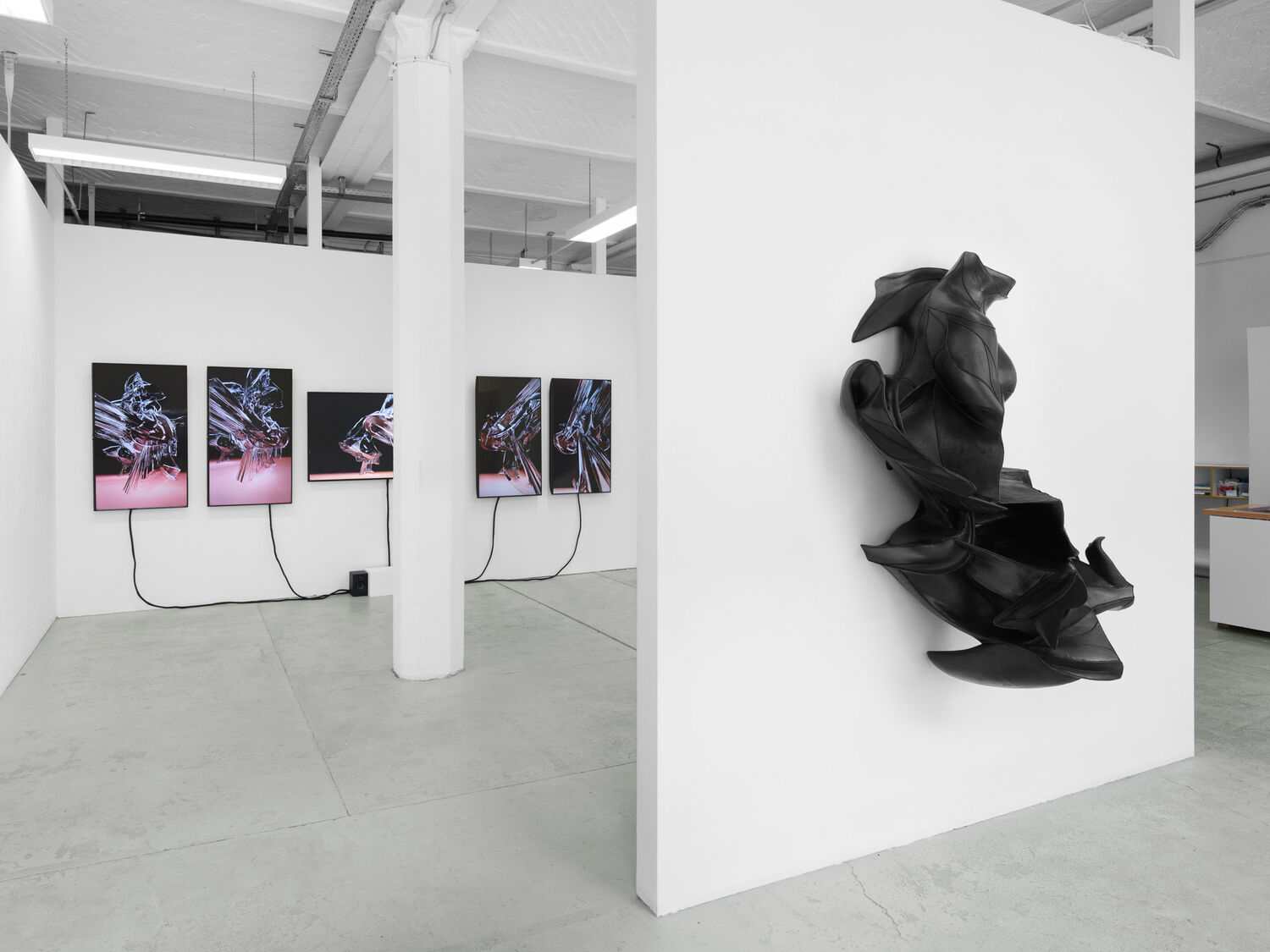
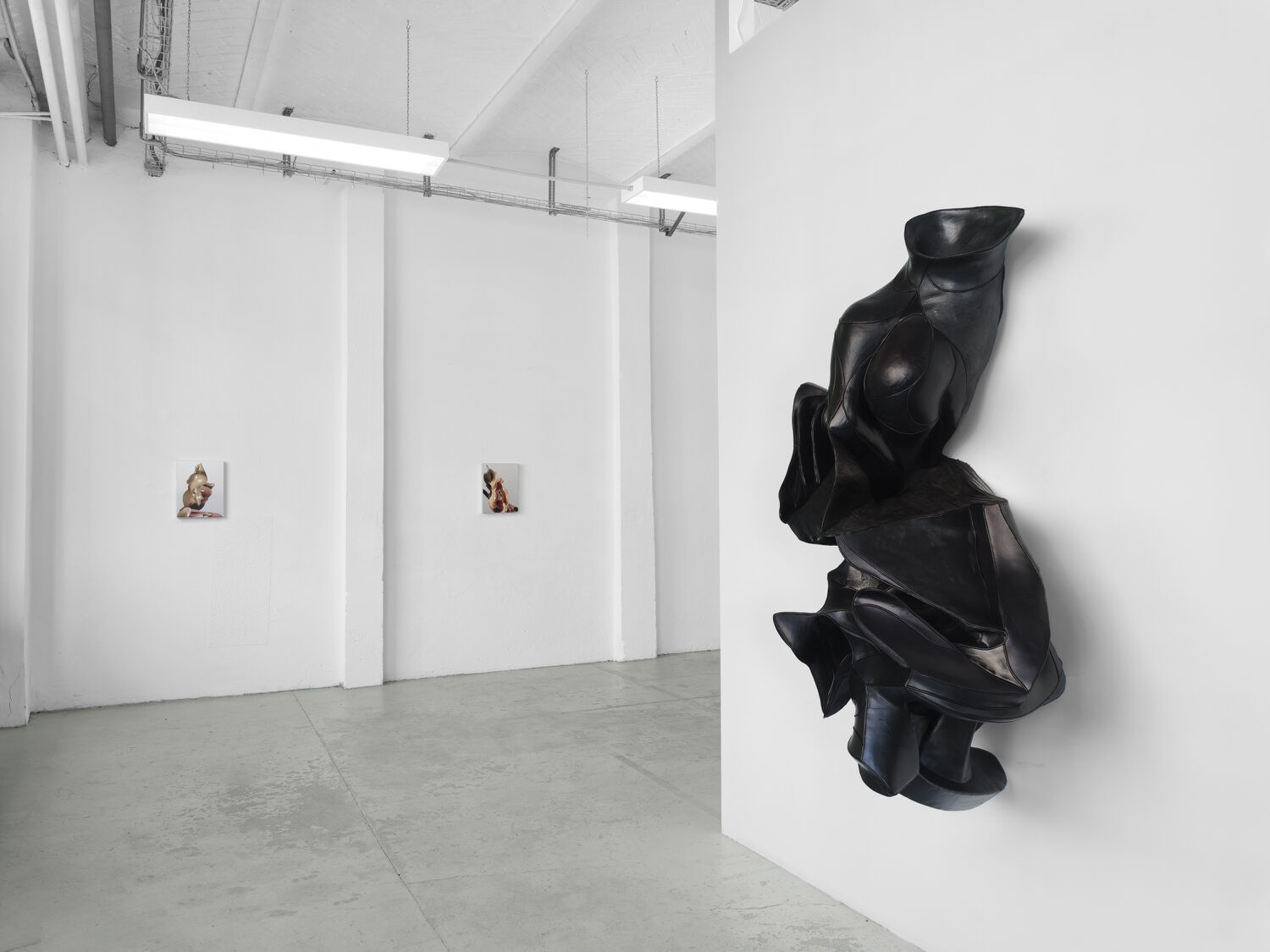
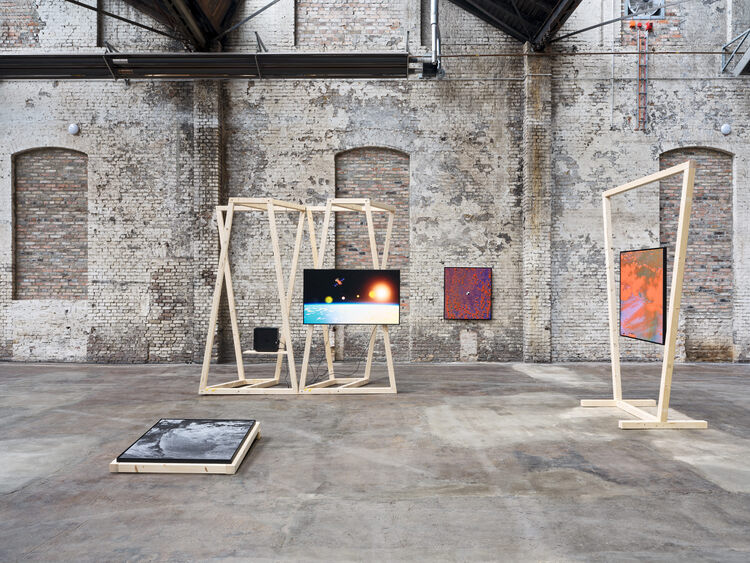
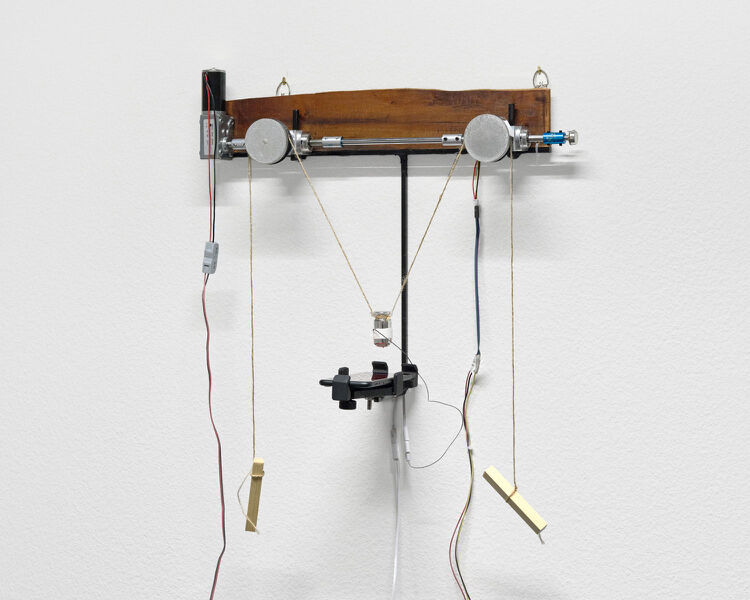
Wie eine Trophäe an der Wand erscheint er in der Skulptur „Void is Seductive No. 2“: Überlebensgroß und mit schwarzem Leder bezogen, wehrhaft-machtvoll – irgendwo zwischen BDSM-Bodysuit, futuristischer Skulptur und Nike von Samothrake. Flatterte im Gewand Nike der Wind wie in einem Segel, so scheinen sich auch die Stromlinienformen dieses Objekts unsichtbaren äußeren Einflüssen anzuschmiegen. Die in der Ausstellung zu sehenden Arbeiten gehen von volumetrischen Körpern aus, die Chatriot am Computer entworfen hat. Eine Besonderheit der 3D-Software ist es dabei, dass die physikalischen Bedingungen des virtuellen Raums, in dem ein Objekt existiert, stets miterschaffen werden müssen. Um CGI-Objekte zu manipulieren benutzte die Künstlerin auch schon einmal die Daten ihres eigenen Atemflusses, die sie mit einem Spirometer *1 aufgezeichnet hatte. Der Schlüssel zum Verständnis eines Dings liegt manchmal in den Kräften, die sich in ihm abgebildet haben.
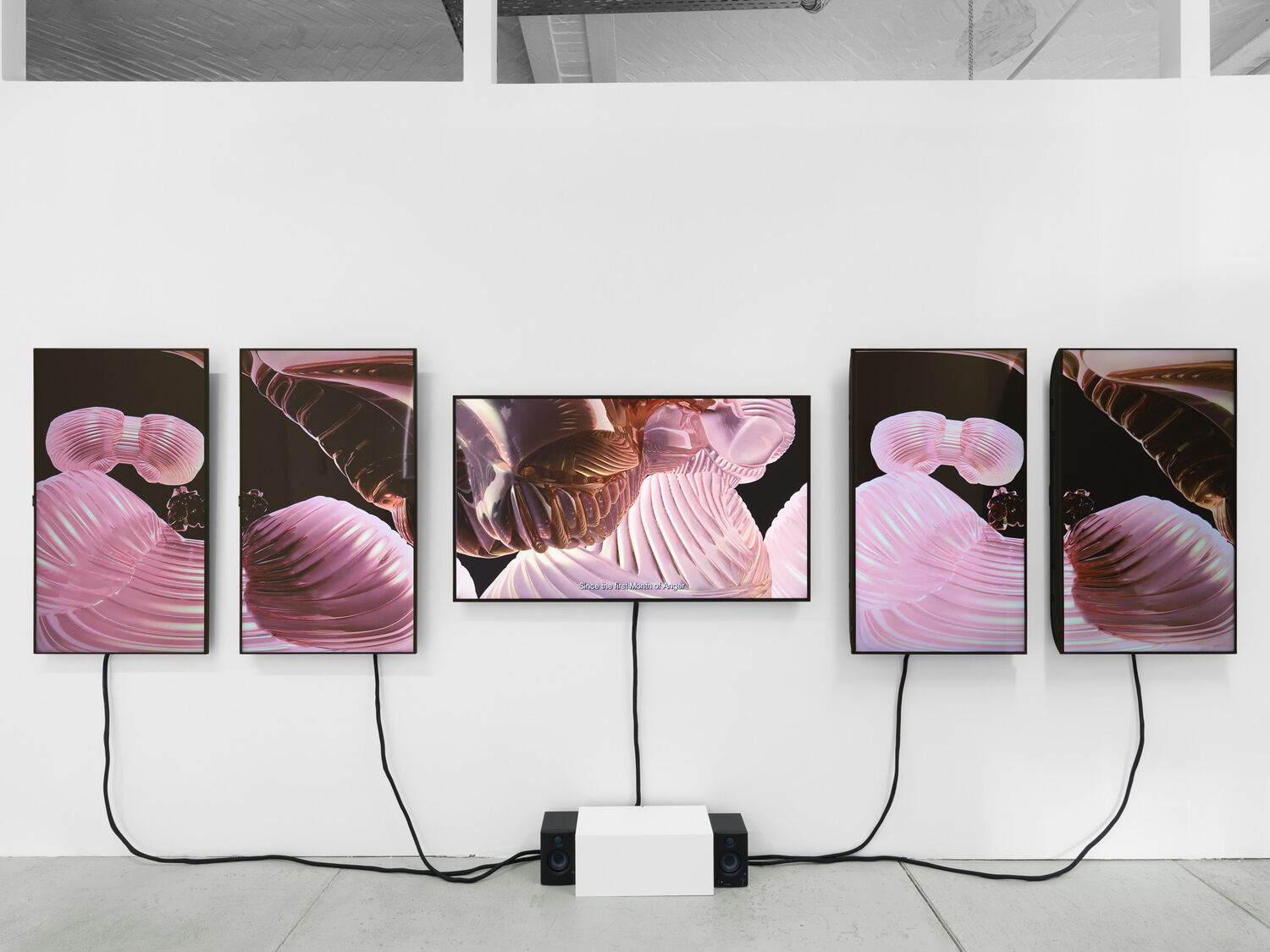
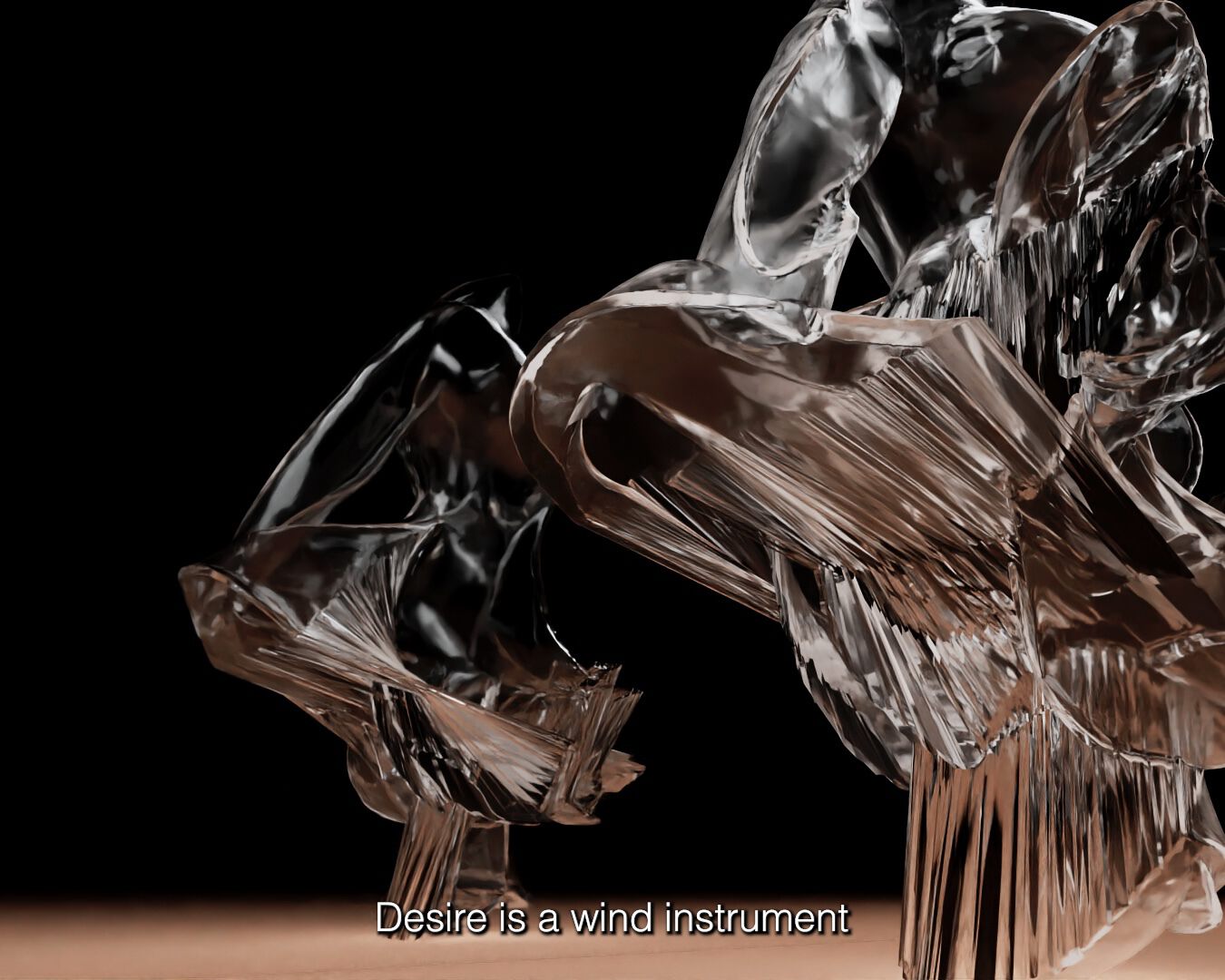
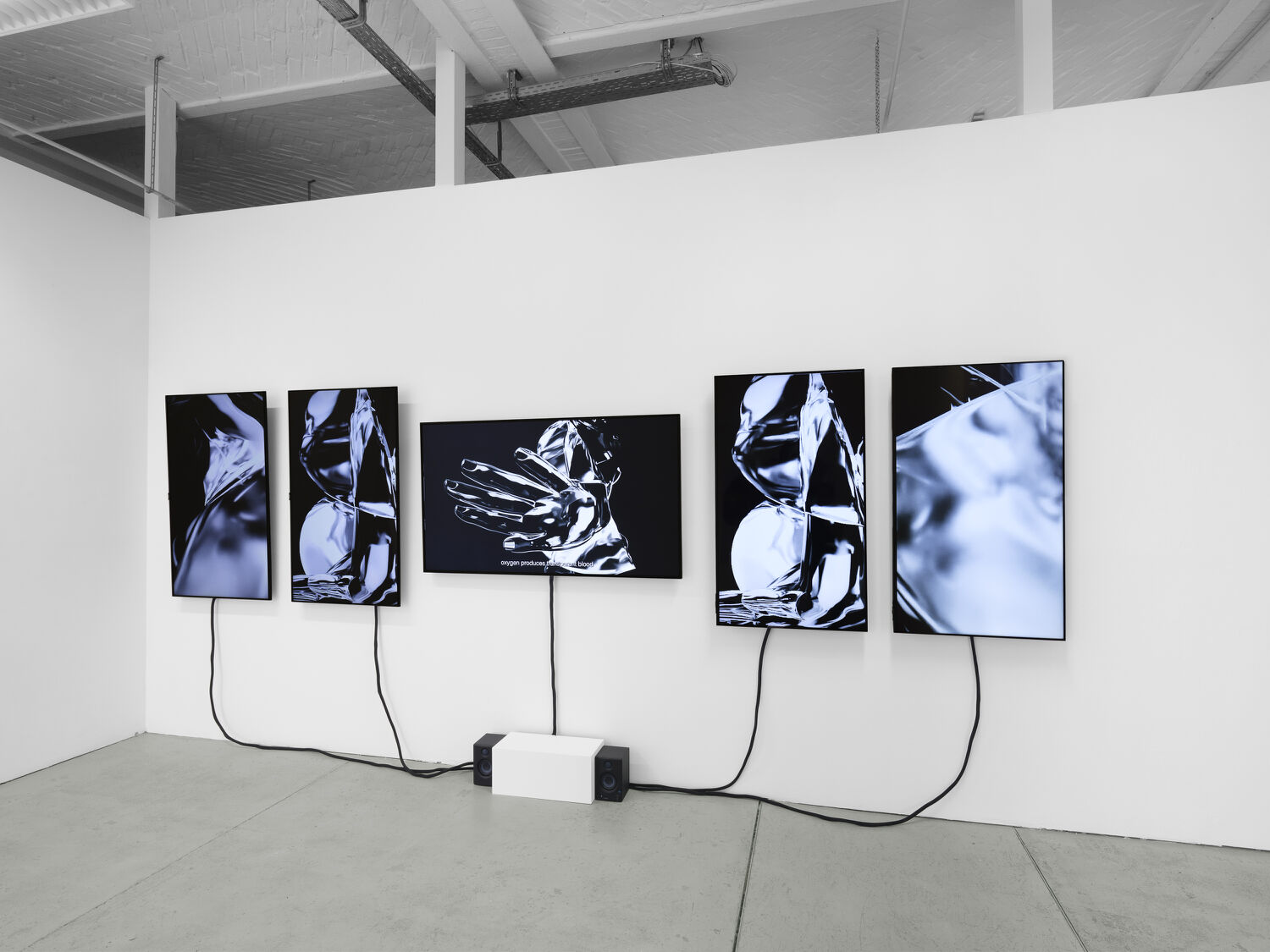
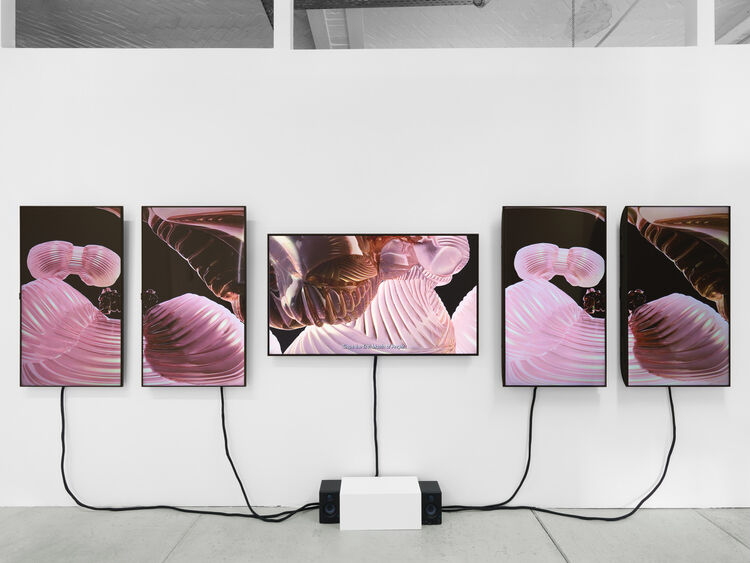
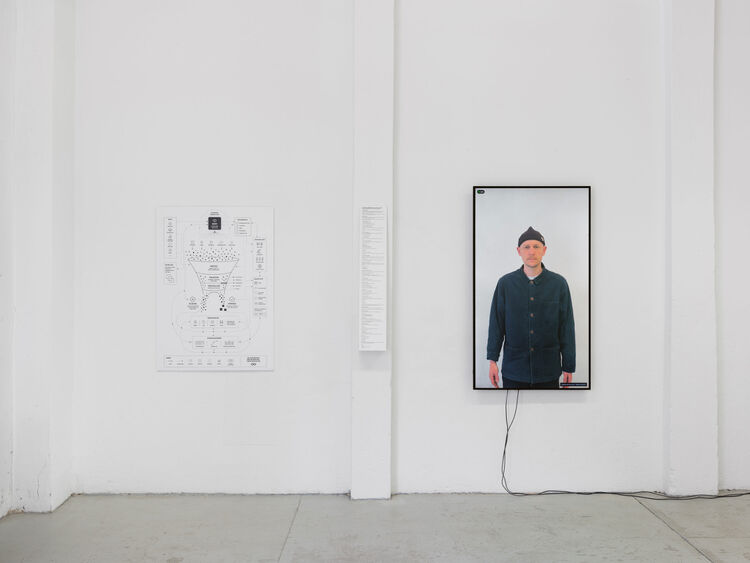
Das Leder-Objekt wiederum ist eine direkte, quasi ‚erstarrte‘ Inkarnation aus dem Video „First Month of Anger“. Um dieses hervorzubringen, bedurfte es einer Art Geisterbeschwörung. Das Wesen, das darin zu uns spricht, erscheint zunächst als pulsierende Membran. War in den spiritistischen Séancen um 1900 das klebrig-weiße Ektoplasma die physische Substanz, in der sich die Seelen von Verstorbenen verfingen und Gestalt annahmen, so ist „First Month of Anger“ gewissermaßen eine Manifestation im Ektoplasma der 3D-Modellierung. Fluide formwandelnd (Torso, Kristall, Maschine oder Organ) und zwischen Opazität und Transparenz changierend, verhandelt es Körperlichkeit als Grenzerfahrung. Ozeanisch zwischen ‚ich‘ und ‚wir‘ oszillierend, scheint es einen orgasmischen Traum zu träumen – von taktiler Berührung und überschäumender Entgrenzung. Das Wesen ist (wie die Künstlerin erklärt) ein nach dem Möbiusschleifen-Prinzip geformter Körper, der die Differenz zwischen Innen und Außen nivelliert. Auch die menschliche Haut schafft Innen- und Außenräume, die fließend ineinander übergehen. Von der Haut her gedacht ist der Körper ein in sich selbst eingestülptes Volumen – eine komplex gefaltete Membran, in der die Welt resoniert *2.
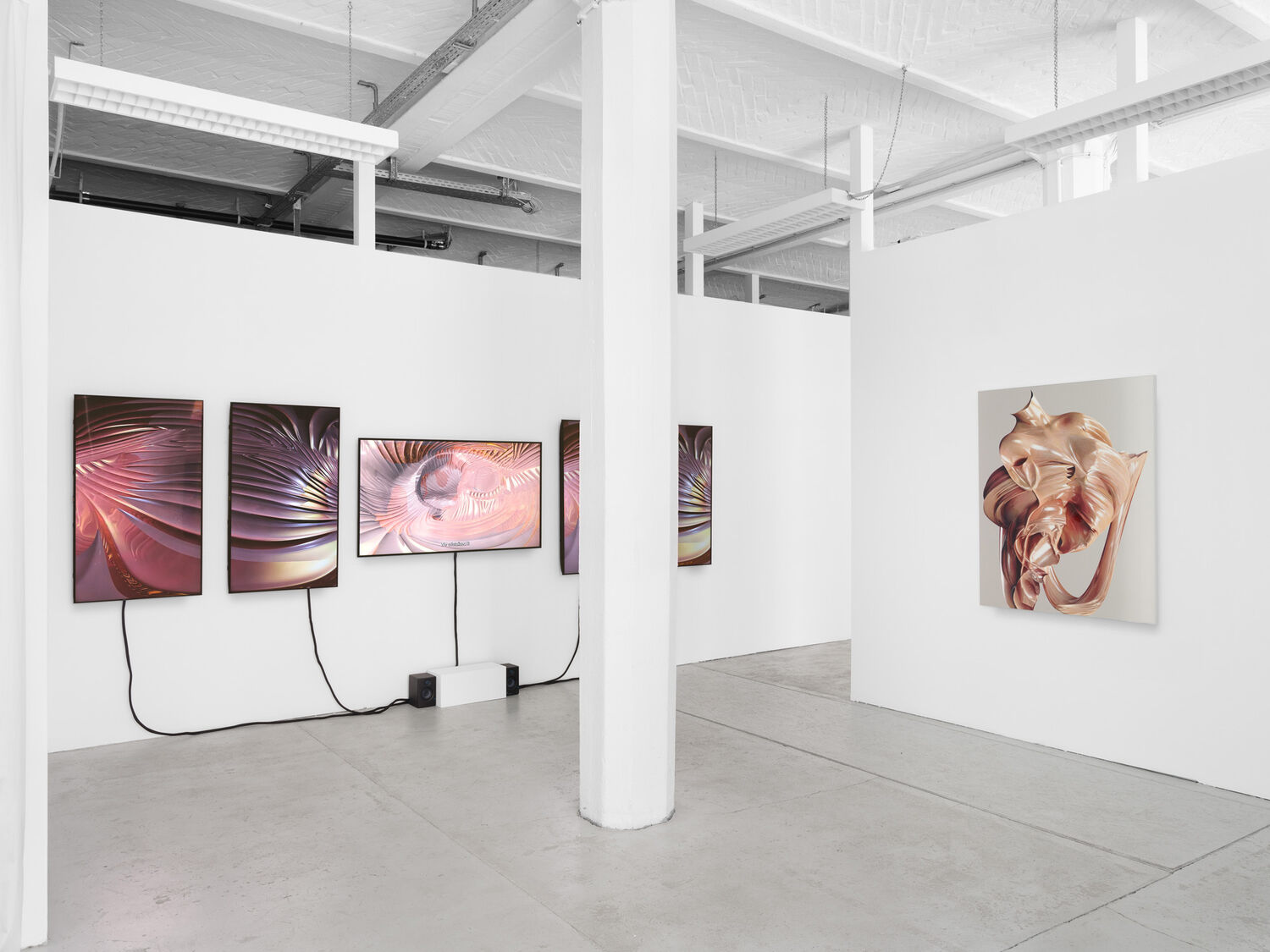
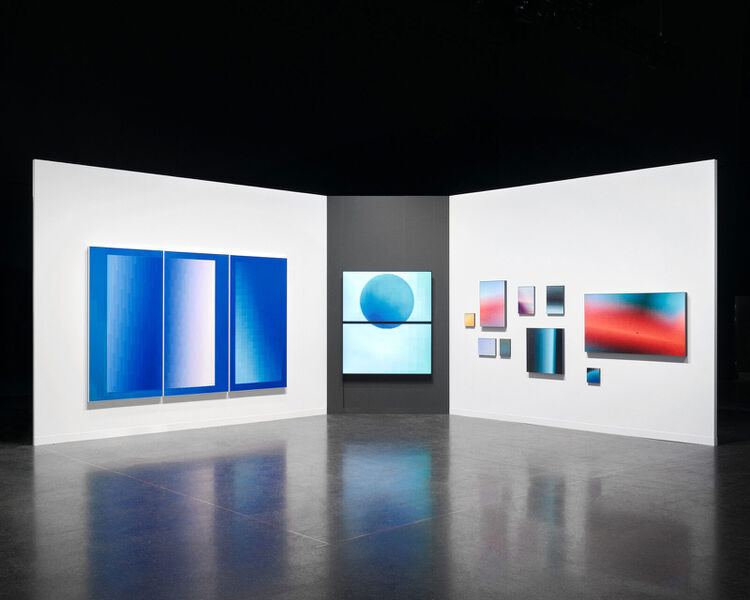
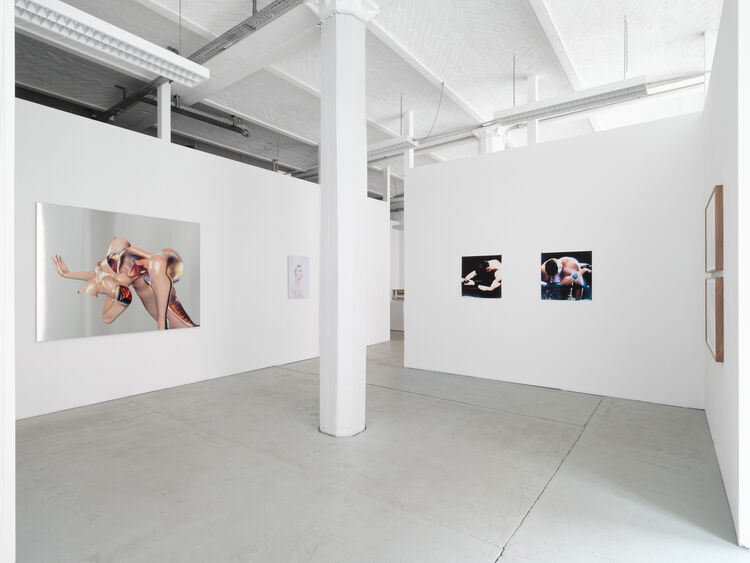
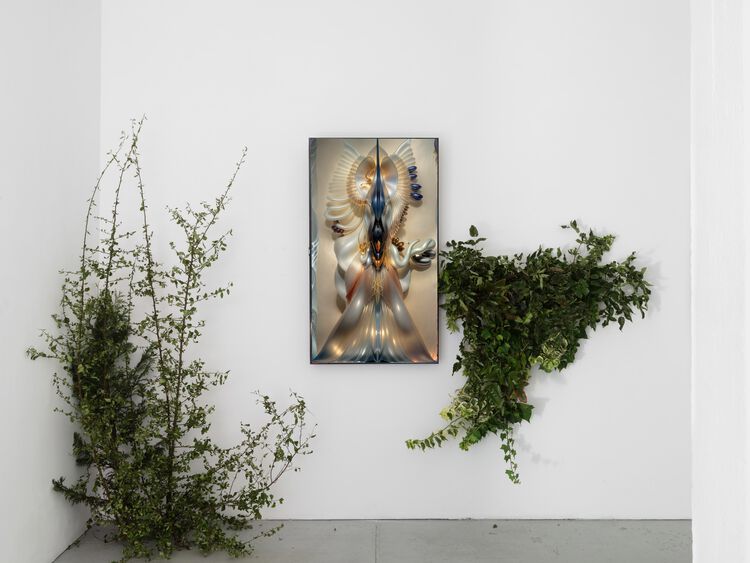
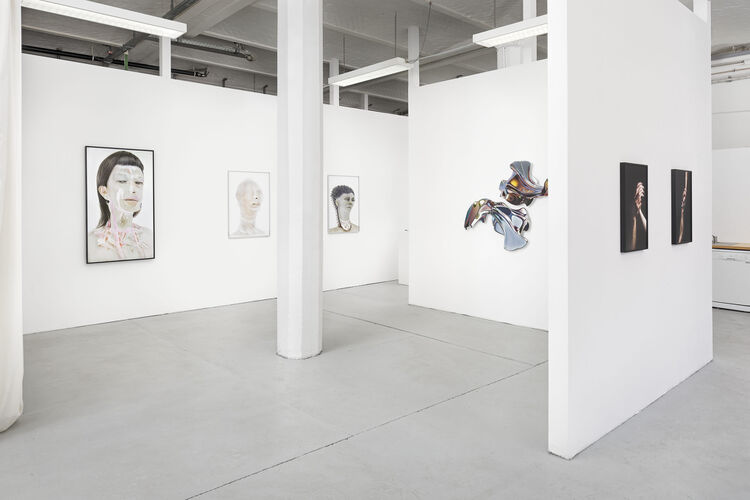
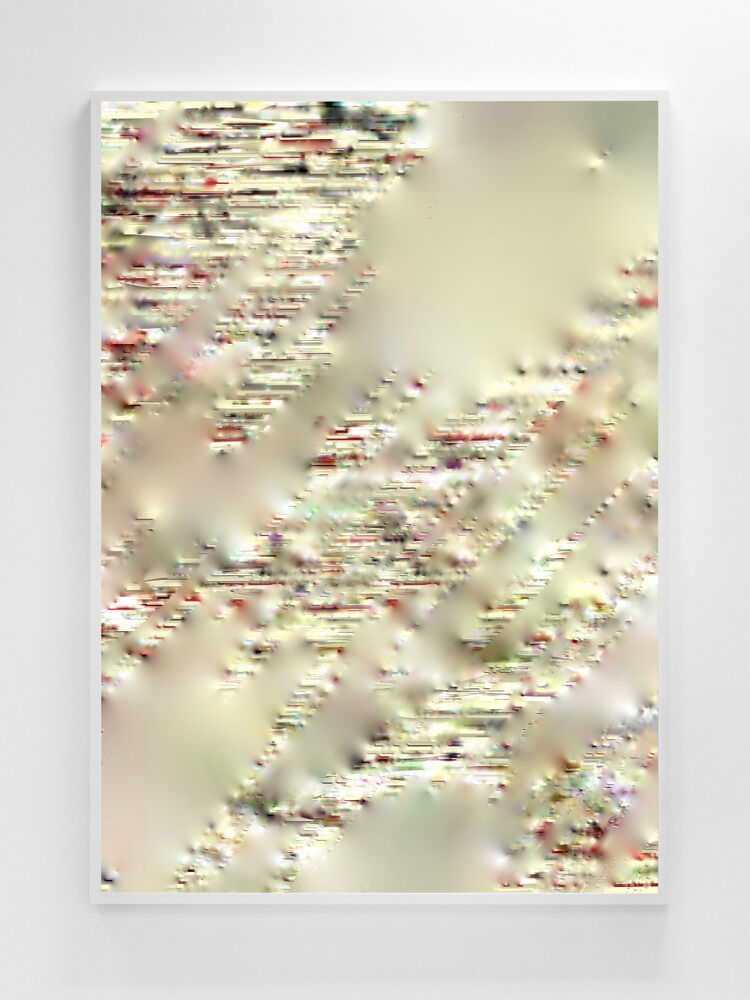
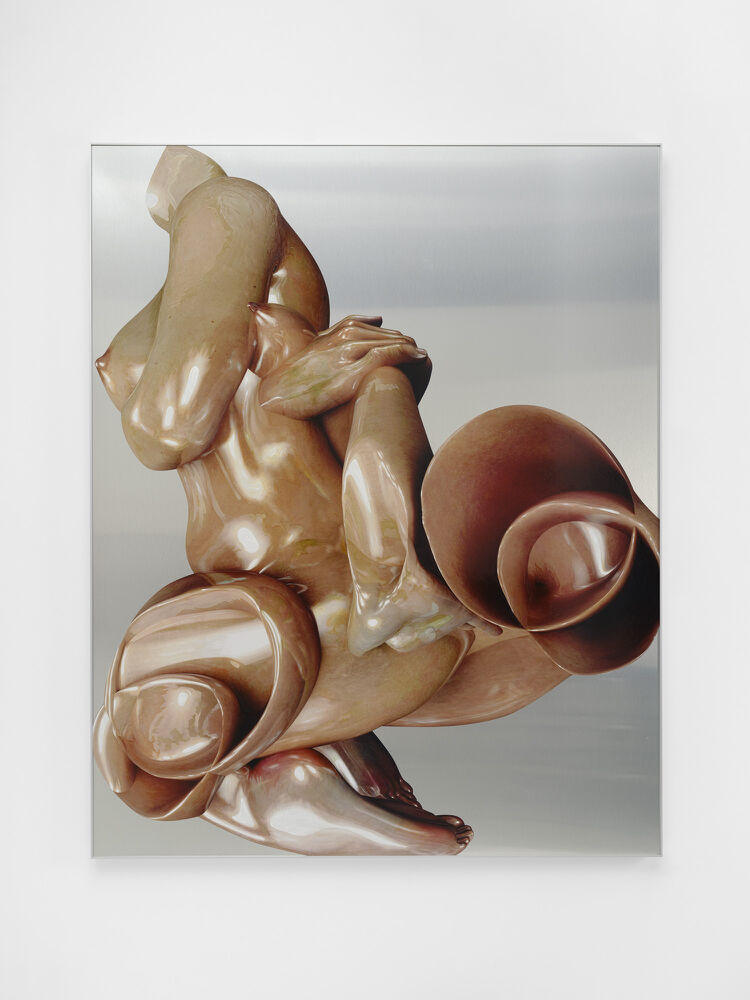
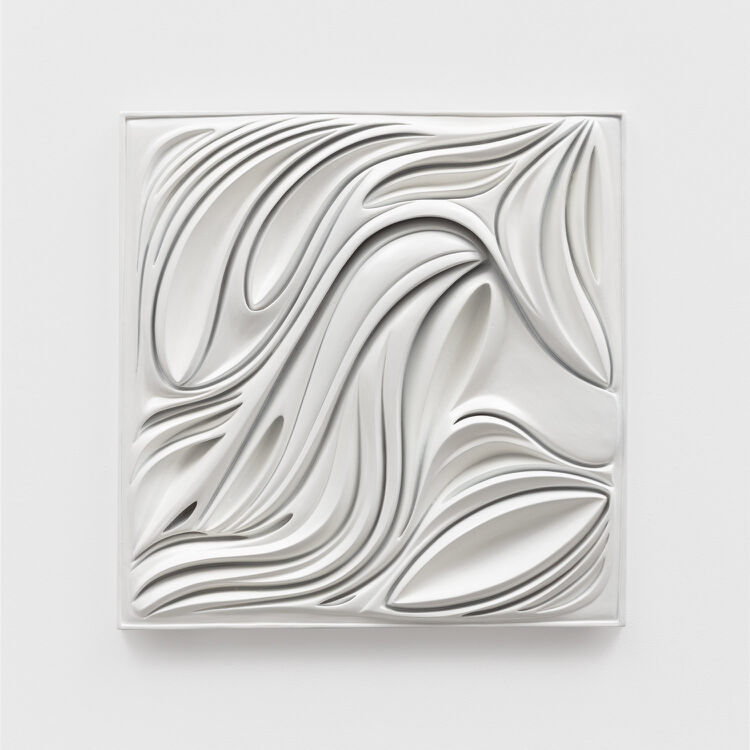
Im malerischen Medium begegnen uns Chatriots Torsi in metallisch-perlmuttenem Glanz. Die Bilder erinnern an die Multiperspektivik moderner Malerei, aber vielleicht mehr noch an die Schnitt- und 3D-Ultraschallbilder der digitalen medizinischen Bildgebung. Ein makelloser Körper, perfekt und feucht wie noch mit Fruchtwasser benetzt, öffnet sich wie eine leere Muschelschale… oder wie der Blütenkelch einer fleischfressenden Pflanze. „Come in! / Come inside / my countless iterations“, lockt uns die Stimme des Videos.
Immer wieder hat die Moderne Monster erschaffen, um sich an technologischen Umbruchsmomenten ihrer Menschlichkeit zu versichern. Frankenstein, Godzilla und ihresgleichen waren die abjekten Externalisierungen eines technologisch neu erfahrbar werdenden Fremden. Mit dieser technologisch erschlossenen Erfahrungswelt tritt Salomé Chatriot in einen ekstatischen Kontakt. Wie die Schale einer Muschel, wird ihr leerer Leib zum Klangkörper, in dem uns das Eigene als Fremdes zurückhallt.
*1 Ein Spirometer ist ein medizinisches Diagnosegerät, das verwendet wird, um die Lungenfunktion zu messen (wie viel Luft die Lunge aufnehmen und abgeben kann, sowie Atemstromstärken).
*2 Ein Gedanke, den Gilles Deleuze in „Die Falte. Leibniz und der Barock“ als universelles Prinzip und Wahrnehmungstheorie entwickelte.
Salomé Chatriot "Void is Seductive"
by Dr. Katharina Weinstock
New media technologies not only expand the ways in which we perceive reality; they also bring something uncanny within it to the surface. As both subject and object of these new realities, the human body has become a central concern of post-digital art. Around a century ago, it was photography—the “objective medium”—that Surrealist artists such as Man Ray and Jacques-André Boiffard used to fragment the living body into strange, object-like parts. The female torso, in its digital, biomorphic abstraction, is also the central motif of Salomé Chatriot’s „Void is Seductive“.
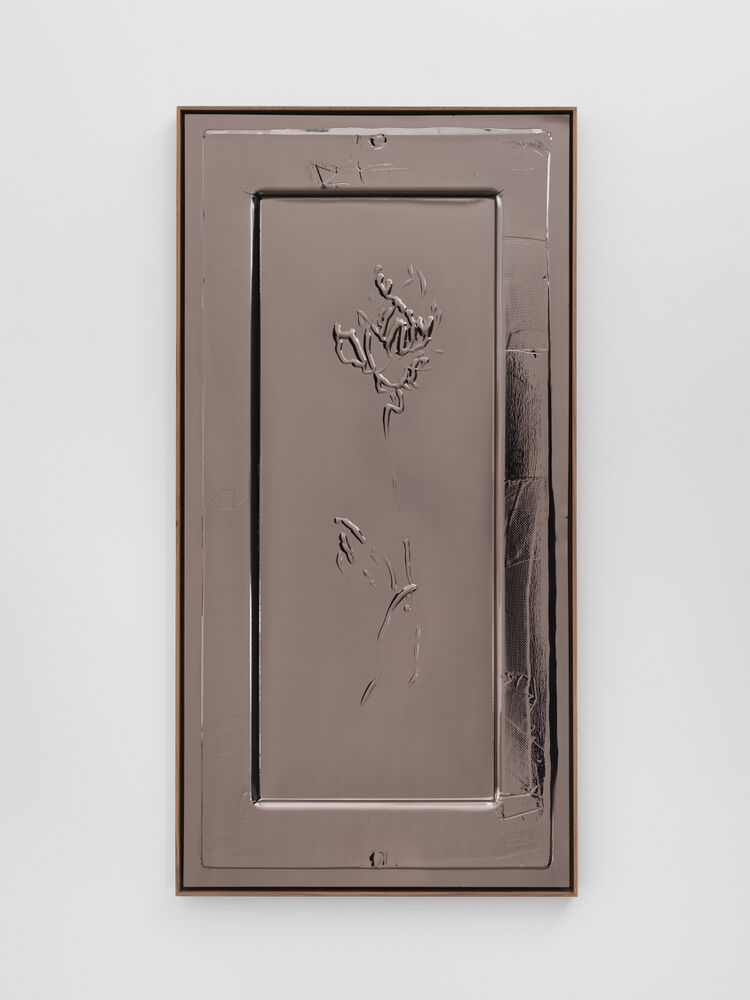
In the sculpture „Void is Seductive No. 2“, the torso appears mounted on the wall like a trophy: larger than life and clad in black leather, defensive and powerful—somewhere between a BDSM bodysuit, a futuristic sculpture and the Winged Victory of Samothrace. Just as the wind billowed through Nike’s drapery like a sail, the streamlined contours of this object seem to yield to invisible external forces. The works in the exhibition originate from volumetric bodies designed by Chatriot on the computer. One particular feature of 3D software is that the physical conditions of the virtual space in which an object exists must always be created alongside the object itself. To manipulate CGI objects, the artist has previously used data from her own breathing, recorded with a spirometer *1. Sometimes the key to understanding a thing lies in the forces that have left their imprint upon it.
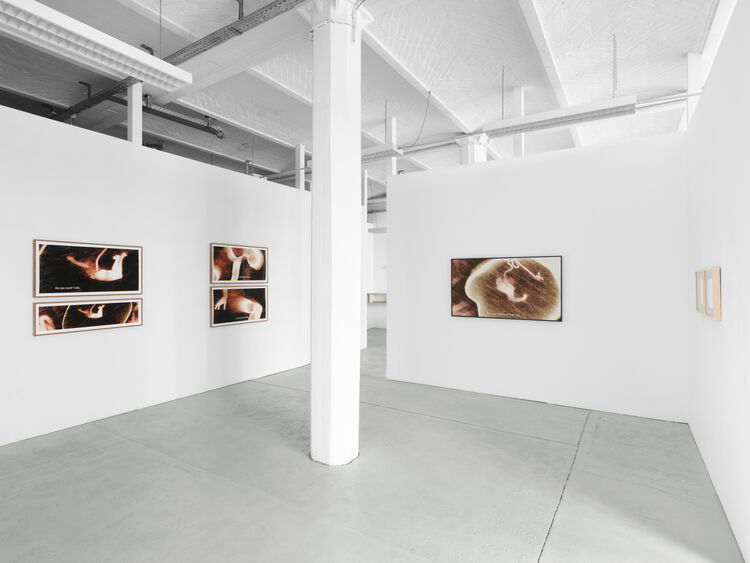
The leather object, in turn, is a direct, almost “frozen” incarnation of a figure from the video First Month of Anger. Bringing it into being required a kind of séance. The entity that speaks to us first appears as a pulsating membrane. In Spiritualist séances around 1900, sticky white ectoplasm was believed to be the physical substance in which the souls of the dead became caught and took form. First Month of Anger, by comparison, might be understood as a manifestation within the ectoplasm of 3D modelling. Fluidly shape-shifting-torso, crystal, machine or organ – and shifting between opacity and transparency, the entity presents embodiment as an experience of boundaries. Oscillating, ocean-like, between “I” and “we”, it seems to dream an orgasmic dream of tactile contact and exuberant dissolution. As the artist explains, the being is a body formed according to the principle of a Möbius strip, collapsing the distinction between inside and outside. Human skin, too, creates inner and outer spaces that flow into one another. Considered from the perspective of the skin, the body is a volume folded in upon itself, a complex membrane in which the world resonates. *2
In the medium of painting, Chatriot’s torsos appear with a metallic, pearlescent sheen. The images recall the multiple perspectives of modern painting, but perhaps even more strongly the cross-sectional and 3D ultrasound images produced by digital medical imaging. A flawless body, perfect and moist as if still coated in amniotic fluid, opens like an empty seashell – or like the calyx of a carnivorous plant. “Come in! / Come inside / my countless iterations, ” the voice in the video beckons.
Modernity has repeatedly created monsters to reassure itself of its humanity at moments of technological upheaval. Frankenstein, Godzilla and their ilk were abject externalisations of an otherness newly made perceptible through technology. Salomé Chatriot enters into ecstatic contact with this technologically expanded realm of experience. Like a seashell, the hollow body she creates becomes a resonating chamber in which what is our own echoes back to us as something strange.
*1 A spirometer is a medical diagnostic device used to measure lung function, including the volume of air the lungs can inhale and exhale, as well as airflow rates.
*2 This idea was developed by Gilles Deleuze as a universal principle and a theory of perception in The Fold: Leibniz and the Baroque.